

Wild garlic panisse
A crispy, salty and simple recipe with wild garlic, plus a few ideas for what to do with it later in the season.

Welcome to Salt and the Earth, a newsletter full of recipes and writing to help you feel a deeper connection to the food you eat, every time you cook. Each entry should arm you with the knowledge and confidence to know what’s growing right now, and exactly what to do with it.
This week, as well as a recipe for the slightly toughening and more mature wild garlic leaves that come later in the season, this entry takes a look at the life cycle of wild garlic and what to do with it at every stage of growth.
Thanks so much for being here. If you’ve arrived by accident, or on the generous recommendation of a friend - you’re most welcome. Subscribe below (it’s free!) and never miss a newsletter.
Hugo x
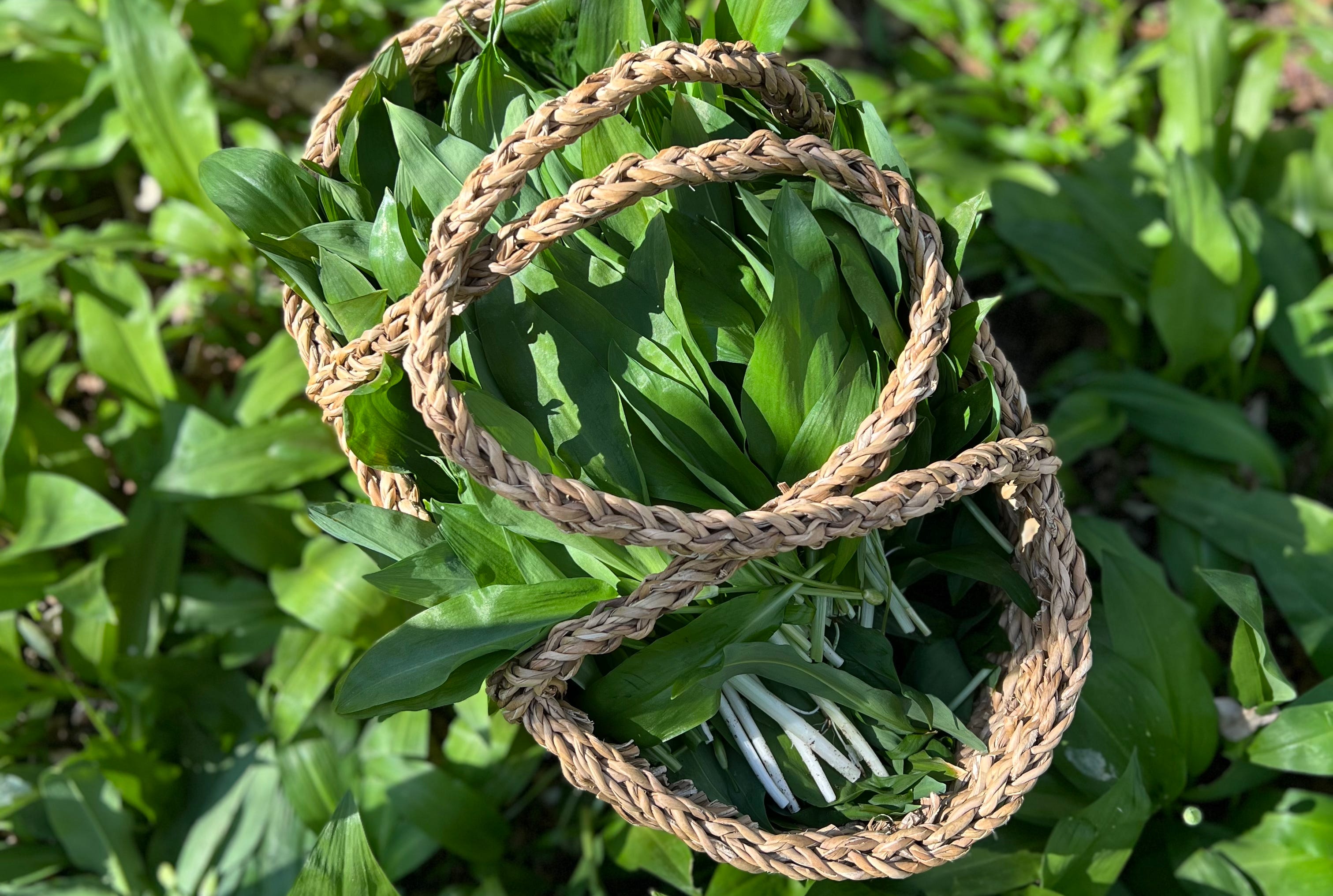
As winter brightly tumbles into spring the leaves of wild garlic that were once vivid green and tender get stronger - in texture, colour and flavour. A slight bitterness arrives, along with a more fibrous leaf. This transformation from a young and tender plant best eaten raw, to a more mature and deeply-flavoured one that yearns to be cooked is really true of most vegetables. At every stage of a plant’s life there are wonderful applications for it in the kitchen. For the most part, vegetables are sold to us at one generation of their life only, and often a latter one - think of a head of cauliflower or a ripe and sweet red tomato - affording us just a handful of the countless ways we could enjoy it.
On a bright March morning at a Farmer’s Market in San Francisco I once saw a grower selling rocket at every stage of its life; roots he had cleaned and encouraged customers to use like a fragrant spice, young and gentle leaves yet to find their true fire, mature ones as we know rocket to be and then punnets of rocket flowers and their subsequent seeds, too. It was a physical example of what can be unlocked when you have direct access to a plant. Unless you have a relationship with a farm or are indeed growing your own food, this access is indeed a bit of a luxury. Not so, however, when it comes to wild garlic.
If you have a go-to wild garlic spot, and are picking it responsibly and with the land owner’s permission, then you have a wonderful opportunity to witness (and taste) the many delicious stage’s of a plant’s life, and all without need for a garden or local farm. Visiting the river bank, green space or woodland you normally harvest your wild garlic from multiple times in a season will give you a whole host of new wild garlic possibilities;
First growth - vibrant, sweet and small leaves. Perfect thrown into a mix of salad raw or added to dishes at the last minute; tossed through a pasta or folded through risotto. Also wonderful beneath a resting steak.
Mid-season leaves - wild garlic as you know it. Lovely preserved in a butter or oil where the flavour and colour are now vibrant enough to stand-up to fats. I daresay delicious in pesto and other raw applications. Beginning to hold their own when heat is applied, too - glorious when done so gently, often with eggs (omelette, quiche or soufflé).
Later growth - now larger, stronger and broad-leaved. Wonderful for wrapping fish, or asparagus as Tomos Parry does here. You can use them to line a terrine mould or to embellish layers of a gratin. Very delicious when deep-fried (more on that later) and benefit from a more intense cook - the leaves in fact need to be broken down somewhat before eating. Fermentation works well here as salt breaks down the cell structure.
Flower buds - an unlock-able bonus should you visit an emerald carpet of wild garlic toward the end of it’s life. These can be fermented or pickled or are wonderful thrown into soups and braises for bursts of intense allium character in a final bowl or plate. Think spring minestrone!
Flowers - one last and final flourish. Beautiful when adorning salads, savoury spring bakes and useful if you’re looking to add a touch of freshness to something cooked and dark, like a bowl of greens or a crock of creamed spinach.
Seed pods - when the final petals begin to fall and many of the leaves are dying back, what remains standing proud is a single stem holding each plant’s seed pods. These can be preserved in salt, and when finished resemble an irresistibly garlic-flavoured caper. The process is a little arduous, so be sure to make enough to last until next year’s crop.
This week’s recipe is a wonderful way with wild garlic in those later stages of growth, just before the seed pods send forth their snow-white flowers. This is a recipe that I return to year after year, and I hope that you will, too.
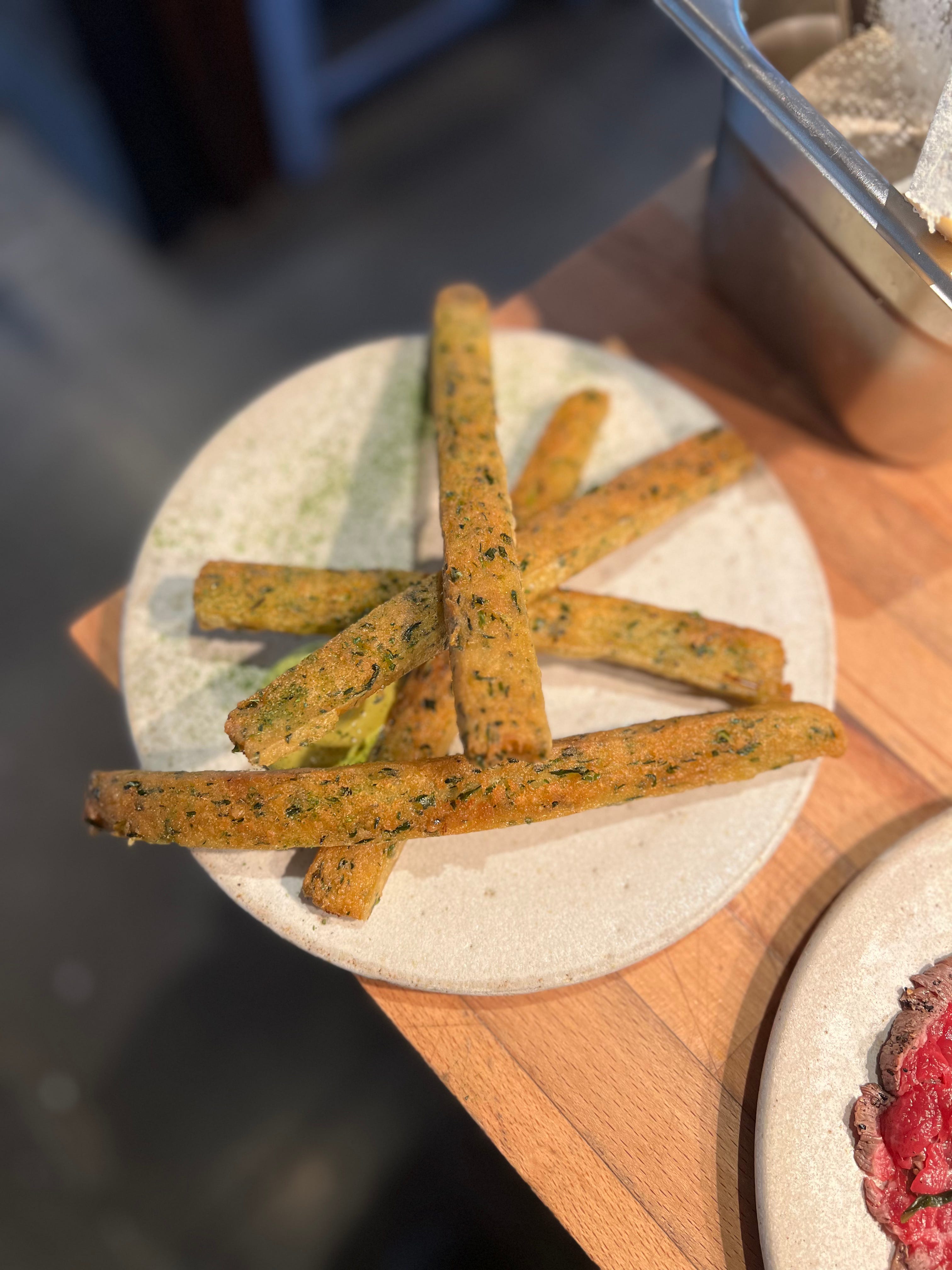
This is a take on a classic bar snack from Marseille, panisse. It can be made with the flour of any legume, although traditionally uses that of chickpeas, has only three ingredients and is one of the most moreish and crispiest ways with wild garlic that you’ll find. An ideal snack for those first milder evenings spent outdoors.
Wild garlic panisse
Serves 6, as a snack
Panisse is traditionally made with chickpea flour which, for the most part, is incredibly hard to source transparently from a supermarket - that is, origin of milled chickpeas unknown. British food heroes Hodmedods not only sell chickpea flour they’ve milled themselves, but they name the very farmer who has grown the legumes on each pack. They also sell green pea, marrowfat and fava bean flour which can all be used interchangeably here, for a wonderful flavour and incredibly vibrant colour. Legumes are a nitrogen-fixing crop that help farmers build soil structure and vitality - improving not only future crops but their surrounding landscape, too. Has the cooking of a deep-fried food ever had such an alluring social and environmental power? I think not!
10g fine salt (a generous pinch)
250g chickpea flour
30g wild garlic leaves
Sunflower oil, for frying (around 300ml)
A little like the cooking of polenta, once the cogs of panisse are turning you’ll find yourself bound to the bubbling pot, so it pays well to measure all of your ingredients first, having them to hand before starting. Weighing the chickpea flour into a measuring jug, rather than a bowl, helps it fall into the pot in a steady stream and (for the most part) prevents lumps of dry flour forming in the panisse mixture later.
Bring 1 litre of water to boil in a small, high-sided saucepan. The hydration of a batch of panisse is very important to the success of the final fried form, so it’s vital that once boiling the pot isn’t left to simmer for too long before starting. As soon as the water comes to the boil, add the salt and stir with a sturdy whisk to dissolve.
A moment later, turn the heat down to low and add the chickpea flour to the boiling water gradually and in a steady stream, whisking all the time while you do so. Once it’s all added, beat the mixture vigorously for a moment or so and cook, beating with the whisk regularly (every few minutes or so), for 25 minutes.
Meanwhile, lightly oil a shallow baking dish (roughly 20cm by 26cm) and set aside. Wash the wild garlic and remove any stalks so that just the leaves remain. Once 25 minutes have passed, quickly tip the hot panisse mixture into a food processor with the wild garlic, using a rubber spatula or spoon to get all the mixture out of the pot. Blitz for a minute, until all visible lumps in the mixture have dissapeared, the wild garlic has broken down into vivd green flecks and the mixture is looking glossy. Immediately tip into your oiled tray (it will start solidifying quickly now).
Cover with greaseproof paper and place in the fridge to set for at least 2 hours, and ideally around 6. At this stage it would keep in the fridge for 48 hours and still fry very happily later
Add sunflower oil to a heavy-bottomed and high-sided pot, ensuring it’s no more than a third full. Warm over a medium-low heat to 180c/350f. Once set, tip the slab of panisse onto a chopping board and cut into your desired size - I like long fingers around 1-2cm thick. Carefully add to the oil, cooking in batches, and fry for about 4 minutes, or until beginning to brown. Turn them halfway for an even cook. Drain on kitchen paper.
Serve with an extra sprinkle of salt or a flavoured mayonnaise. Making a mayonnaise with a batch of herb oil creates a wonderful, brightly-coloured dip that’s full of flavour and well worth the effort.
Love wild garlic - and panisse! (And thanks for mentioning our pulse flours 🙏)
Oh this sounds so good Hugo. Thank you, another lovely thing to make with my recent wild garlic stash! 🙏